La Fenice Opera House Entry with Audio Guide
Explore Venice's legendary opera house at your own pace with skip-the-line access and multilingual audio commentary
Reserve
Hand-picked by our editors — only the best 5 experiences from 47 reviewed
Verified partners for every tour, free cancellation where available, and instant confirmation on every booking.
Explore Venice's legendary opera house at your own pace with skip-the-line access and multilingual audio commentary
Reserve
1 hr 15 min
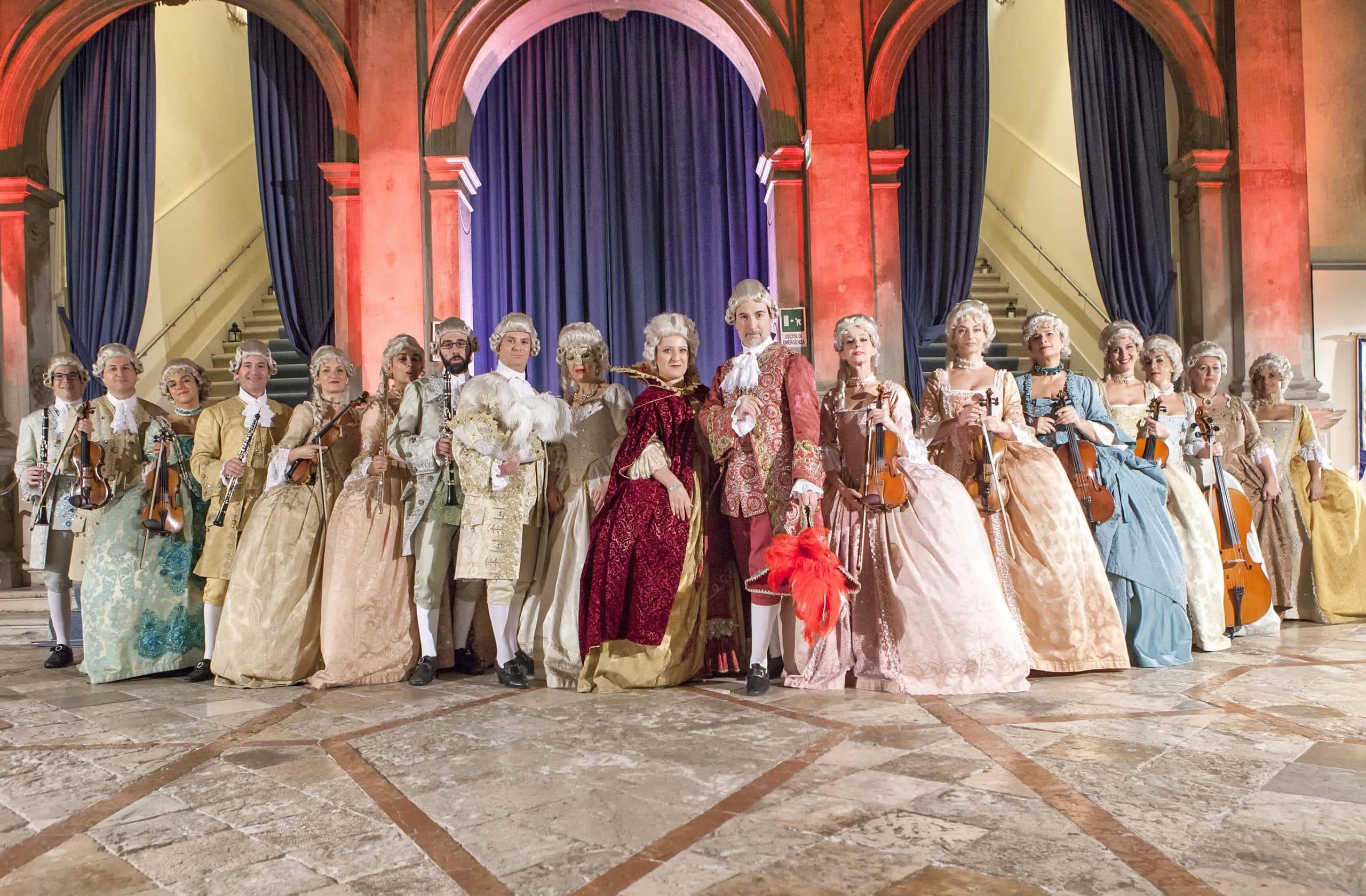
Live orchestral performance of Vivaldi's masterwork in historic Venice with period costumes
Reserve
2 hr
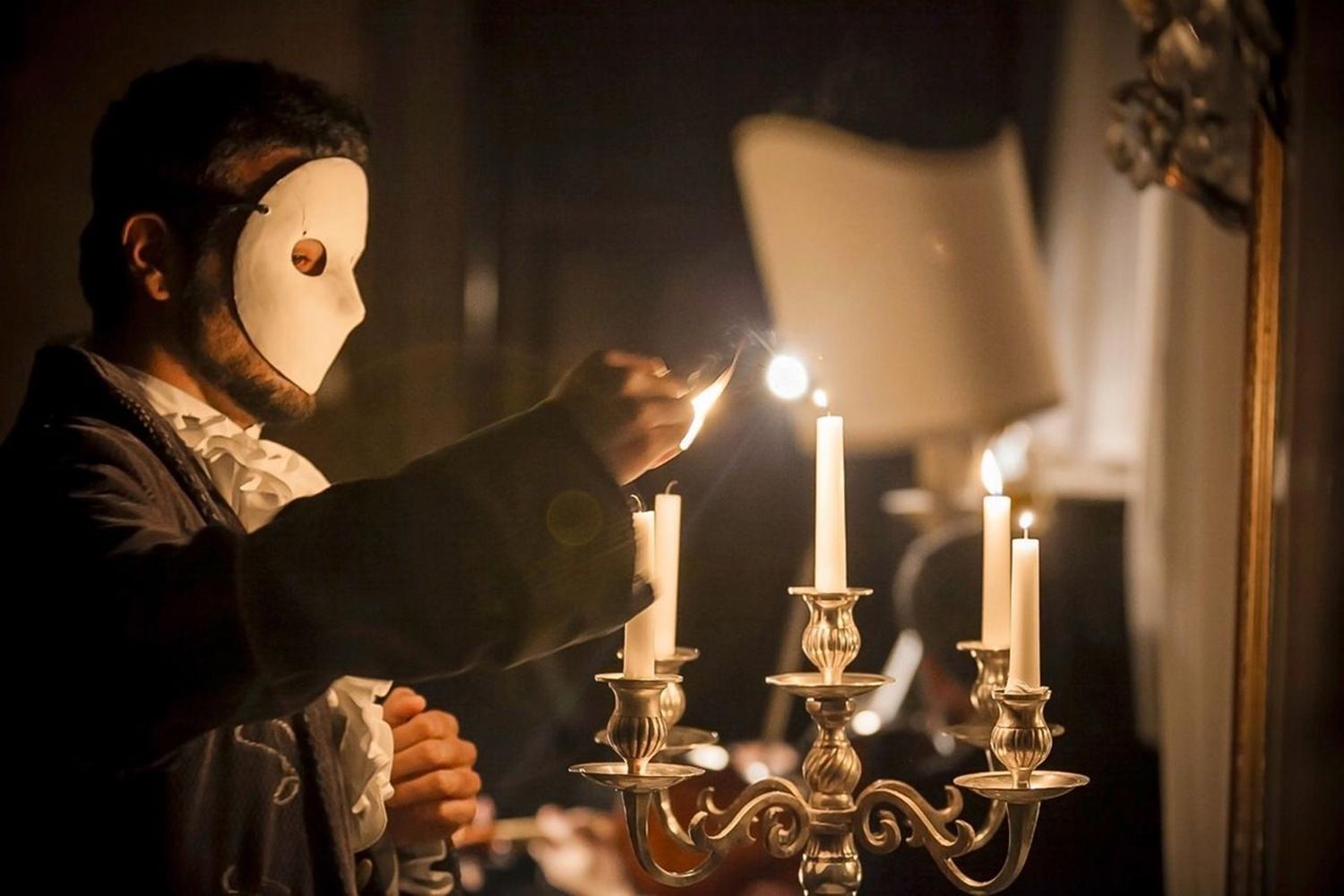
Immersive operatic performance moving through three ornate rooms of a Venetian-Gothic palazzo
ReservePrices from verified partners. Availability updates in real time at checkout. Free cancellation policies apply where shown.
Teatro La Fenice offers a quintessential 19th-century operatic atmosphere, while the Teatro Olimpico provides a unique Renaissance perspective; most visitors who do both call the former the more accessible urban landmark.
| Feature | Top pick Teatro La Fenice | Teatro Olimpico |
|---|---|---|
Primary Appeal |
Ornate gilded auditorium | Oldest indoor theater |
Location |
Central Venice | Vicenza city center |
Accessibility |
Walkable within Venice | Train from Venice required |
Historical Context |
18th-century reconstruction | 16th-century Renaissance design |
Best For |
Classical opera enthusiasts | Architecture and history buffs |
Visiting Format |
Self-guided with audio | Guided or independent entry |
| See tickets → |
Verdict: Choose the Teatro La Fenice for an iconic Venetian experience using your venice opera house tour tickets tours, or prioritize the Teatro Olimpico for a deeper look at Renaissance scenography through venice opera house tour tickets tour options, while noting that various venice opera house tour tickets tickets provide distinct entry advantages for each site.
Choose your ticket, select your date, and reserve in under two minutes. Secure checkout handled by our verified partner.
Instant confirmation by email, with a mobile voucher you can save offline. No printing, no queuing at a collection desk.
Arrive at the entrance, show your voucher on your phone, and walk in. Most tickets include priority or skip-the-line access.
Practical details for your visit straight from our verified partners — hours, access, rules, and how to get there.
Campo San Fantin, 1965
Official access point for all individual ticket holders.
Take the Vaporetto to San Marco or Sant'Angelo stops and walk 10 minutes.
The venue is centrally located; follow signs for La Fenice from St. Mark's Square.
For daytime tours, smart-casual attire is sufficient. Evening performances may require more formal dress, particularly on opening nights where black tie is recommended.
Keep personal items small, as Teatro La Fenice is a historic, compact venue. Bulky items like large backpacks or umbrellas must be deposited at the cloakroom.
Non-commercial photography is permitted in the auditorium when rehearsals are not in progress. Professional photoshoots, including wedding or period costume photography, are strictly forbidden.
Teatro La Fenice is fully accessible to visitors with special needs. An elevator is located at the Calle de La Fenice entrance, and staff can assist with navigating the boxes and galleries.
Mobile devices should be silenced during any tour or performance. Audio guide content is available via the official app, which can be downloaded for use on your personal device.
The venue is family-friendly, offering a specialized children's audio guide tour. Please note that children under 4 are not admitted to performances.
The Apollinean Café, located within the historic Apollinean Halls, is available for visitors to enjoy refreshments. Outside food and beverages are not permitted within the main theater areas.
Animals are strictly prohibited inside the theater. Exceptions are made for guide or assistance dogs accompanying visitors with disabilities.
The 12 EUR entrance fee includes a high-quality audio guide. Ensure your device is charged or bring headphones to fully enjoy the narrated history of the opera house.
Campo San Fantin, 1965
Official access point for all individual ticket holders.
Get directionsBest time to go, insider tips, nearby landmarks, and the cancellation fine print — flip through to skim what matters to you.
How crowds, weather, and events shift across the year.
Mild weather and moderate crowds make mornings ideal for exploring the halls.
Expect higher visitor numbers; arrive at 09:30 to beat the heat.
Cooler temperatures are perfect for walking tours of the district.
Quieter period, though holiday concert seasons can lead to schedule variations.
Small details that turn a good visit into a great one.
Arrive promptly at 09:30 to experience the auditorium before daily rehearsals begin.
Non-bookable sights within a short walk — free to visit, easy to pair.
Historic cathedral with stunning mosaics.
The historic seat of Venetian power.
Iconic limestone bridge connecting to the prison.
Famous spiral staircase with panoramic views.
Flexible, no hidden fees.
All tickets for Teatro La Fenice are non-refundable as per Italian law. Tickets remain valid for 24 months, allowing flexibility for future visits if technical closures occur.
Hand-picked options within walking distance — pick a district for vibe, or a specific hotel for convenience.
Central area surrounding the opera house.
Quiet, elegant streets near the theater entrance.
Convenient access to major shopping and dining.
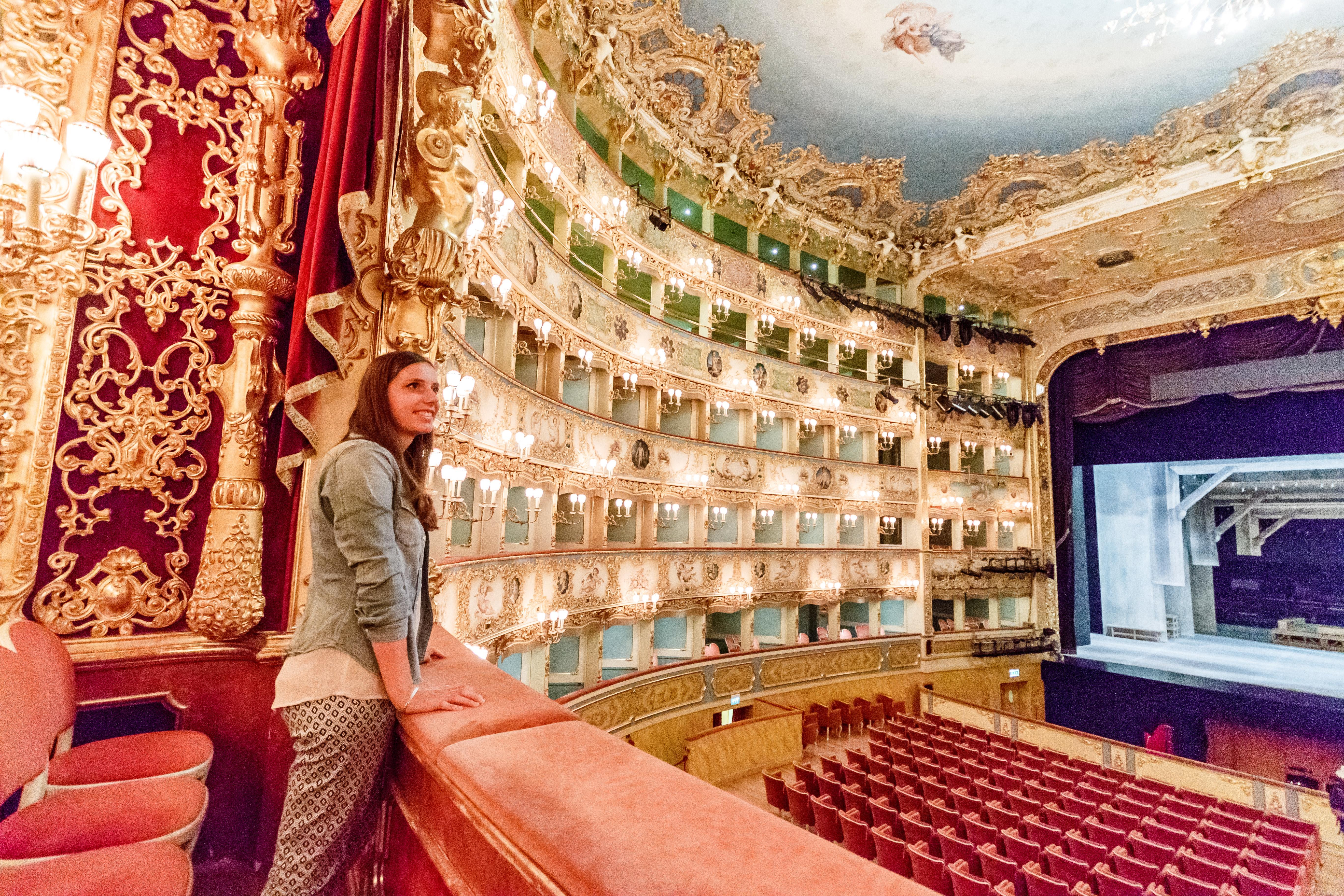
Teatro La Fenice has burned to the ground twice — once in 1836, again in 1996 — and each time Venice rebuilt it more lavishly than before. The name itself, "The Phoenix," anticipated the cycle. When Gian Antonio Selva's neoclassical jewel box first opened in 1792, it seated 1,500 beneath a painted sky and became the workshop where Rossini, Bellini, Donizetti and Verdi premiered works that redefined opera. Verdi's Rigoletto debuted here in 1851, La Traviata two years later. The 1996 arson reduced the interior to ash, but the 2003 reconstruction matched the 1837 post-fire design stroke for stroke, down to the gold-leaf stucco and the 174 candelabra-style lamps. Today La Fenice anchors Venice's classical music calendar with 180 performances annually. The main auditorium holds 1,076 across five horseshoe tiers, each draped in red velvet and framed by white-and-gilt pilasters. The royal box, center first tier, retains its original 18th-century sightlines. Beyond the auditorium, the Sale Apollinee — Apollo Rooms — display costumes from premieres, Verdi's letters, and Rossini's handwritten scores. Venice opera house tour tickets include an audio guide narrated in eight languages, tracing the path from the atrium's marble checkerboard floor through the upper galleries where rehearsal windows overlook Campo San Fantin. La Fenice sits 400 meters from Piazza San Marco, tucked behind a maze of calli too narrow for any vehicle. The campo in front was a campo santo — a cemetery — until the 18th century, and the church opposite, San Fantin, held last rites for condemned prisoners. The juxtaposition, sacred and secular, death and rebirth, is pure Venice. Inside, the house's acoustics favor the human voice over instruments; architects angled the tiers to reflect sound forward, not upward, creating an intimacy rare in halls this size. Stendhal called it "a theater where one listens." That precision survives every reconstruction. The venue's 230-year archive lives in the attached museum, chronicling premieres that rewrote European culture. Stravinsky conducted The Rake's Progress here in 1951. Britten's The Turn of the Screw premiered in 1954. Nono, Maderna and Berio tested avant-garde works in the 1960s under Carlo Maria Giulini. For a building that has twice vanished, La Fenice exerts uncommon gravity. It remains the only major opera house where you can stand on the stage during public visiting hours, look up at the tiers, and occupy the same square meter where Verdi stood in 1853, waiting for the curtain.

"Stendhal called it a theater where one listens."
A step-by-step walkthrough of the visit — what you'll see, how long each stage takes, and the details that matter.
You enter through the atrium at Campo San Fantin, collect your audio guide at the desk, and climb the main staircase past oil portraits of 19th-century impresarios. The guide syncs to numbered plaques as you move. At the top, double doors open onto the first tier, and the auditorium spreads before you — five horseshoe balconies rising to a frescoed ceiling where allegorical figures float in cerulean sky. You descend to the orchestra level and walk onto the stage. The wood underfoot is scuffed from decades of blocking rehearsals. From here, the tiers curve around you in red and gold, each box a small room with its own door and mirror. The royal box, dead center, is marked with the Savoy crest. You look up through the chandelier's 150 bulbs toward the ceiling fresco — Apollo awarding the muses — repainted in 2003 from photographs of the 1837 original. Back in the corridor, you follow the audio guide into the Sale Apollinee. Glass cases hold Rossini's autograph manuscripts, Verdi's top hat, Maria Callas's 1949 costume. A timeline on the wall tracks every premiere from 1792 to present. You pause at the window overlooking the campo, where gondolas used to moor when the theater had a water entrance. The last stop is the upper gallery, where rehearsal windows frame the stage below, and you can hear faint piano scales from the practice rooms.
The entrance fee for a standard visit at Teatro La Fenice is 12 EUR, which includes your audio guide.
Your tickets are generally valid for daytime entry during the standard operating hours of 09:30–18:00.
No, your tour tickets grant access to the building's historical areas but not to performances, which require a separate show ticket.
Reduced price tickets are available for visitors over 65 years old (9 EUR) and students aged 7-26 (7 EUR).
Most visitors spend between 1.5 to 2 hours exploring the theater and the Maria Callas exhibition with their audio guide.
Yes, Teatro La Fenice is fully accessible; please inform staff in advance if you require elevator usage at the Calle de La Fenice entrance.
Digital tickets on your smartphone are acceptable for entry at the main gate.
Tickets are typically non-refundable and fixed to the date or validity period provided; check the specific terms of your booking.
Photos are allowed in the auditorium (non-commercial) when no rehearsals are occurring, but large bags must be left in the cloakroom.